
Outdoor guide
Pool Deck Coating in Michigan: What Holds Up Through Winter
Why Michigan pool decks wear out, what a textured coating does and doesn't fix, and how to plan a pool deck resurfacing around the swim season.
Quick answer
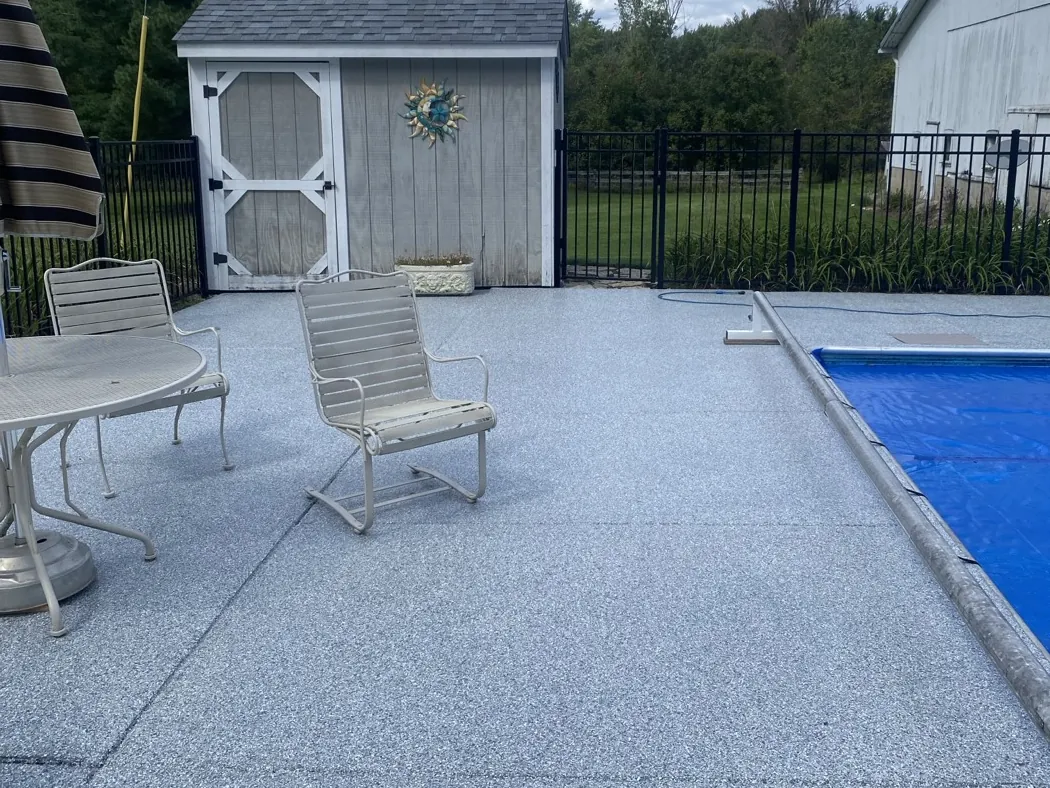
A pool deck coating is a textured surface bonded to the concrete around your pool. In Michigan, it does two jobs: it gives wet bare feet predictable grip, and it closes off the concrete so less water soaks in and freezes over winter. It only works on a slab that has been ground and repaired first.
A pool deck in Florida gets sun and splash. A pool deck in Oakland County gets sun and splash for three months, then gets buried under snow, soaked by spring melt, and frozen and thawed over and over until May. That second life is what wears Michigan pool decks out, and it is why a deck that looked fine when the pool closed can look rough and flaky when the cover comes off.
If you are looking at your pool deck and wondering whether to coat it, resurface it or tear it out, here is what is actually going on with the concrete, and what a coating can and cannot do about it.
What a Michigan winter does to a pool deck
Concrete is porous. Water from splash-out, rain and melting snow soaks into the surface. When the temperature drops, that water freezes and expands. When it warms up, it thaws. The U.S. General Services Administration's guide to scaling concrete lists freeze-thaw stress and heavy use of deicing salts among the causes of a concrete surface flaking away.
A pool deck gets a heavier dose than most outdoor concrete:
- It stays wet longer. Splash-out all summer, then a pool cover that sheds water onto the deck all winter.
- It is often shaded on one side. Fences, trees and the pool house keep part of the deck damp and cold while the rest dries out.
- It meets other materials. Where the deck meets the coping, the house or a fence post, water collects and movement is concentrated.
The result shows up in spring: a rough, sandy surface, flaking patches, edges breaking away at the coping, and cracks along the control joints.
Saltwater pools and the deck
Saltwater pools are common across Metro Detroit, and they raise a fair question about the deck. The American Society of Concrete Contractors notes that deck problems around saltwater pools often start near a control joint or where the slab meets the coping, and are often blamed on the sealer when the real issue is salt water meeting concrete.
You do not need to give up your salt system. What it means for the deck:
- Rinse the deck down regularly during the season so salt does not dry and build up on the surface.
- Pay extra attention to the strip right around the coping, where swimmers climb out and drip.
- Tell whoever coats your deck that it is a saltwater pool. It changes what they should look for during prep.
What a pool deck coating actually does
A coating does not make old concrete new. What it does is change the surface you walk on and the surface water sits on.
Grip where it counts. Around a pool, the finish has to stay predictable under wet bare feet. That is why pool deck work gets a textured finish on purpose. A high-gloss floor that looks great in a garage is the wrong choice next to the water.
A closed surface. A bonded coating closes off the open pores on top of the slab, so splash-out and melting snow have a harder time soaking in. Less water in the surface means less water to freeze.
A surface that is easier to live with. Leaves, sunscreen, tracked-in grass and chlorine drips are easier to rinse off a coated surface than out of rough, open concrete.
A fresh look without tearing out the deck. If the slab underneath is sound, coating it is far less disruptive than breaking out and repouring around a pool, with its plumbing, coping and fencing in the way.
What a coating can't fix
This is the part a good contractor should tell you before you sign anything.
- Settled or heaving sections. If a slab has sunk or lifted, a coating will follow the same uneven surface. Trip edges stay trip edges.
- Water running toward the pool or the house. A coating is a surface, not a drainage plan. If water pools on the deck, the slope is the problem.
- Concrete that is breaking up all the way through. Surface scaling can be repaired. A slab that is crumbling deep down needs to be replaced, not covered.
If we look at your deck and see any of these, we will tell you plainly, even if it means the answer is not a coating.
Prep is most of the job
Most coating failures are prep failures. The coating sits on top of whatever was underneath, and if that layer is weak, dirty or sealed, the coating comes off with it.
On a pool deck, prep usually means:
- Grinding the surface. Diamond grinding takes off the weak, scaled top layer and old sealers, and opens the concrete so the new system can grab. The International Concrete Repair Institute's surface preparation guideline is the industry reference for matching prep methods to coatings.
- Repairing the damage. Spalled spots, pop-outs and broken edges are cut out and rebuilt.
- Treating the joints. Control joints and the joint at the coping are handled so normal slab movement does not crack straight through the finish.
- Checking how the deck drains. Before anything goes down.
Then the coating system goes on, with a texture chosen for wet feet. You can read how our four-step install works on the process page.
When to coat a pool deck in Michigan
Outdoor coating work depends on the weather, so timing matters more than it does in a garage or basement.
- Spring, before opening day, is the most popular window. The deck is clear, the damage from winter is easy to see, and the work is done before anyone wants to swim.
- Late summer or early fall, after closing, is the other good window. The pool is covered, the deck is not in use, and the coating is in place before the next winter.
- Mid-season work means taking the pool out of use while the deck is done.
Because outdoor schedules fill up in spring, the best time to have someone look at your deck is often the fall or winter before. Call and ask about timing for your project. We would rather plan it around your pool than give you a blanket answer.
Choosing a color and texture
Pool decks look best in lighter, natural tones that sit well next to water, brick, stone and pavers. Lighter shades also tend to feel more comfortable underfoot in direct sun than dark ones, which is worth thinking about on a south-facing deck.
Texture matters more than color. We bring samples so you can feel each texture with your hand, and ideally with bare feet, before you choose. You can see our flake blends on the colors and finishes page, and real outdoor jobs, including a coated pool surround, on our projects page.
For everything we coat outside, see our outdoor coatings page. If you are coating other outdoor concrete at the same time, our guide to choosing a coating for a concrete patio walks through the other options.
Caring for a coated pool deck
A coated deck is low maintenance, but not no maintenance:
- Rinse it with a hose during the season, especially around a saltwater pool.
- Clean up leaves before winter so they do not sit and stain under the snow.
- Use a plastic shovel, not a metal blade, if you clear snow off the deck.
- Use a pool-safe or gentle cleaner. Skip harsh acids.
- Look at the edges at the coping each spring and call if anything has changed.
Get your pool deck looked at
Coast to Coast Concrete Coatings works out of our shop at 1525 Leon Rd in Walled Lake and coats pool decks, patios and outdoor concrete across Metro Detroit. We will look at the slab, tell you honestly whether it should be coated, repaired or replaced, and show you texture samples in person. Call (248) 624-4400 or request a quote.
Frequently asked questions
Can you coat an old, rough pool deck?
Often, yes. A rough or scaled surface is usually ground and repaired as part of prep. If the concrete has settled, heaved or is breaking up deep down, we will tell you it needs to be replaced rather than coated.
Is a coated pool deck slippery when wet?
Pool decks get a textured finish on purpose so the surface stays predictable under wet bare feet. We show you the texture options in person before anything goes down.
Will a saltwater pool damage a coated deck?
Salt water can be hard on concrete pool decks, especially near the coping. Rinsing the deck regularly helps, and you should tell your contractor it is a saltwater pool so prep can account for it.
When is the best time to coat a pool deck in Michigan?
Usually in spring before the pool opens or in late summer and fall after it closes. Outdoor work depends on the weather, so call and ask about timing for your deck.
Is coating cheaper than replacing a pool deck?
If the slab underneath is sound, coating is usually far less disruptive than tearing out concrete around a pool. Whether it is the right call depends on the slab, which is why we look at it first.